
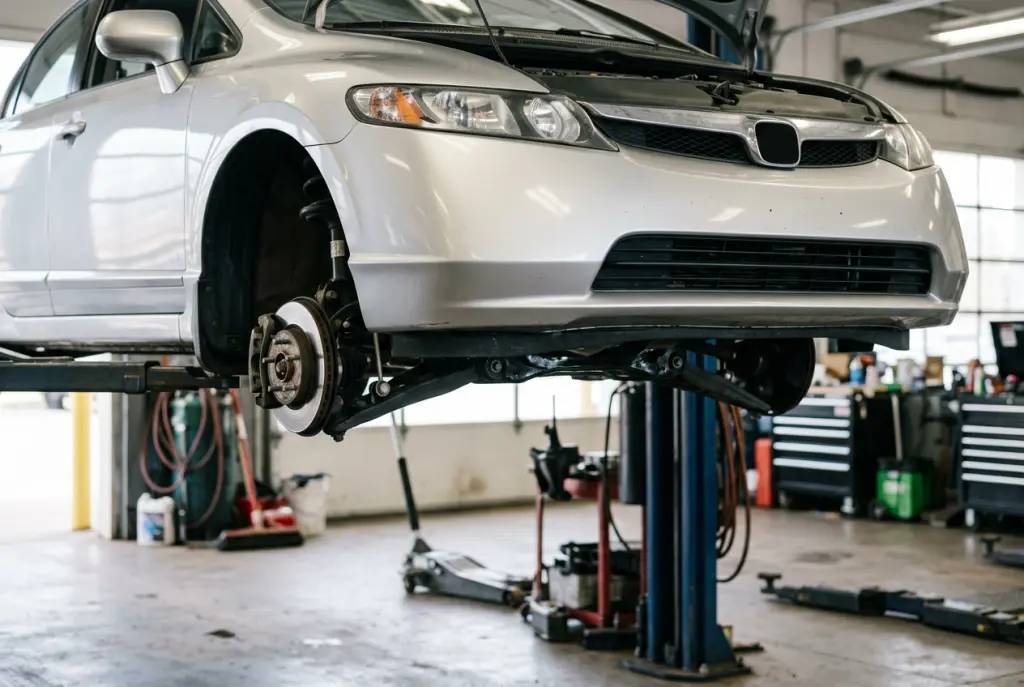
The inside edges of the rear tires on a 2006-2009 Honda Civic wearing down fast, sometimes to the cords, while the rest of the tread looks fine is commonly diagnosed as excess negative rear camber. The rear upper control arm geometry on this generation Civic is commonly reported on 2006-2009 models to pull the tops of the rear wheels inward beyond factory spec. The fix is a rear camber correction using an adjustable rear upper control arm or a camber kit, followed by a four-wheel alignment.
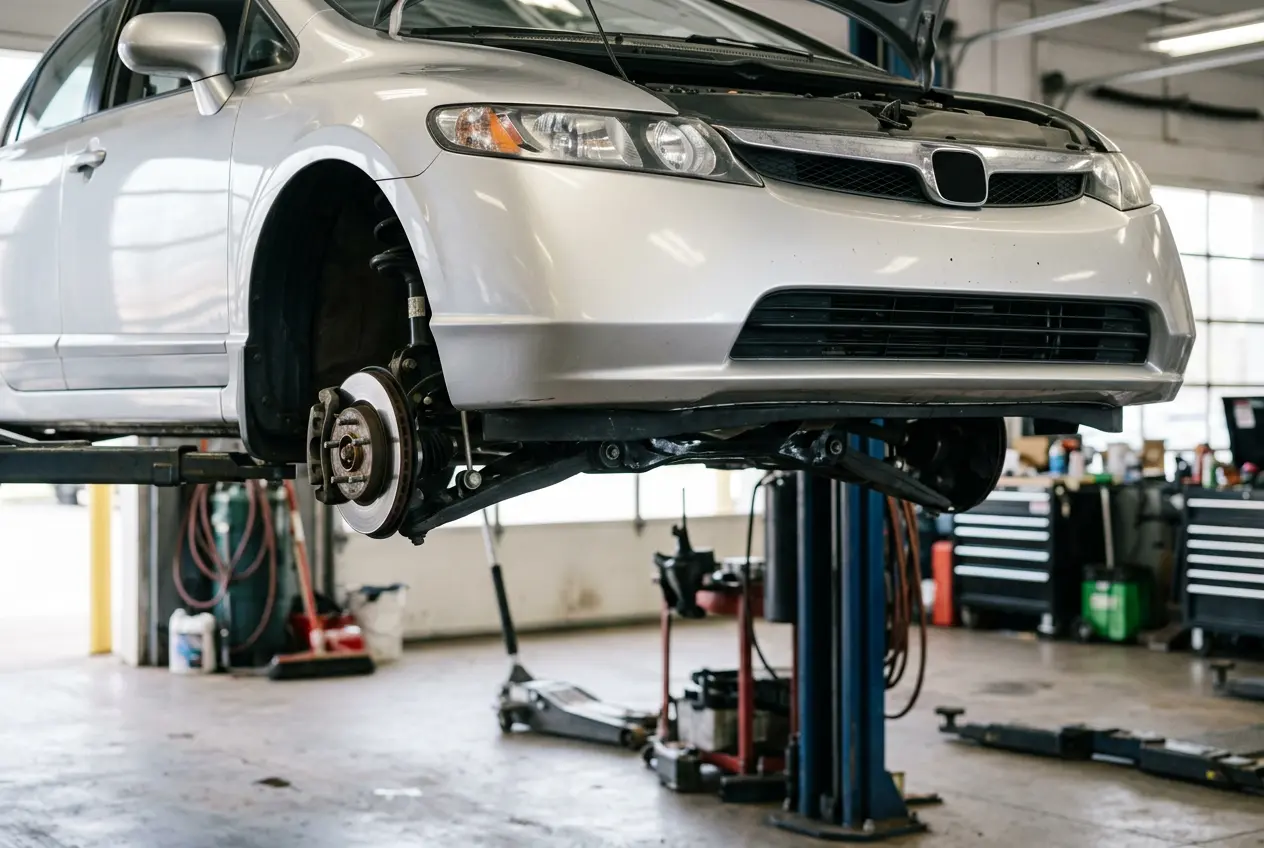
This affects the 2006-2009 Honda Civic sedan and coupe sold in the United States. If you drive one of these and the rear tires are going bald on the inside while the outer tread still has life, read on before you buy new tires.
Why Is the Inside Edge of My Rear Tire Wearing So Fast?
Tire wear on the inside edge almost always points to negative camber, meaning the top of the wheel tilts inward toward the car. A small amount of negative camber is normal and helps handling. Too much puts the tire contact patch at an angle, and the inside shoulder carries most of the load. That shoulder wears down while the rest of the tread barely changes.
On the 2006-2009 Civic, the rear upper control arm geometry is commonly diagnosed as the source of excess negative camber. The arm length and mounting angle can push camber beyond the range a standard alignment can correct. An alignment machine will show the rear camber out of spec, but turning the adjustment bolts alone will not bring it back into range because the adjustment range itself is too narrow.
What Does Camber Actually Mean?
Camber is the angle of the wheel when you look at the car straight on from the front or rear. Zero camber means the wheel stands perfectly vertical. Negative camber means the top leans in. Factory spec for the 2006-2009 Civic rear is a small amount of negative camber, typically around -1 degree or less. When it drifts to -2 degrees or beyond, inside-edge wear accelerates quickly.
How Do I Know If This Is My Problem?
Run your hand across the rear tire tread from outside to inside. If the inside shoulder feels noticeably lower or sharper than the rest of the tread, camber is the likely cause. You can also crouch behind the car and look at the rear wheels: if the tops lean noticeably inward, that is visible negative camber. A four-wheel alignment printout will confirm the exact numbers.
Symptom Stages: Early, Mid, and Late
| Stage | What You Notice | Likely Cause | Urgency |
|---|---|---|---|
| Early | Inside rear tread wearing slightly faster than outside; no handling change yet | Rear camber out of spec, commonly -1.5 to -2 degrees | Schedule soon; tires are losing life faster than normal |
| Mid | Inside shoulder noticeably lower; car may feel slightly loose in corners | Camber beyond -2 degrees; possibly worn rear suspension bushings | Schedule promptly; tire life is being cut significantly short |
| Late | Inside edge worn to cords or near cords; rear handling feels vague or unstable | Severe camber; tire structurally compromised | Do not drive; a tire at the cords can fail without warning |
Is It Safe to Keep Driving on These Tires?
If the inside edge is worn to the cords or close to them, the tire can fail without warning. A blowout at highway speed is a serious safety event. Do not drive on a tire that has reached the cords. If the wear is in early or mid stages, you can drive carefully to a shop, but the longer you wait, the more tire life you lose and the closer you get to an unsafe condition.
Road salt from November through April accelerates bushing wear in the rear suspension. Degraded bushings can make camber worse over time, so a car that was borderline in the fall can be significantly out of spec by spring. If you have been putting off this check, it is worth getting done.
What Parts Are Involved in the Fix?
The standard repair for excess negative rear camber on the 2006-2009 Civic involves one or more of the following:
- Adjustable rear upper control arm: Replaces the fixed OEM arm with one that allows the camber angle to be set within a wider range. This is the most direct correction.
- Rear camber kit: Bolt-in hardware that adds adjustment to the existing mounting points. Less involved than a full arm replacement in some cases.
- Rear suspension bushings: If the existing bushings are cracked, collapsed, or corroded, they need replacement before the alignment will hold.
- Four-wheel alignment: Required after any camber correction. Without it, the new geometry is set but not confirmed to spec.
- Rear tires: If the inside edges are worn past the wear bars, new tires go on after the camber is corrected, not before.
What Does This Repair Cost?
Several things move the number, and no shop can give you an accurate figure without measuring the camber, inspecting the bushings, and checking tire condition. Here is what affects the price:
- Parts choice: An adjustable rear upper control arm costs more than a basic camber bolt kit. The arm is a more complete correction; the kit works when camber is only moderately out of range.
- Bushing condition: If rear suspension bushings are worn, replacing them adds parts and labor. On a high-mileage 2006-2009 Civic, this is worth checking before the alignment.
- Tire replacement: If both rear tires are worn to the point of needing replacement, that cost is separate from the alignment and camber work.
- One side or both: Both rear corners are typically corrected at the same time to keep camber balanced side to side.
Ask for a written estimate that separates the camber correction, the alignment, and any tire costs so you can see what each piece involves.

Does Honda Have a Recall for This?
No confirmed recall applies specifically to rear camber and inside tire wear on the 2006-2009 Honda Civic. This is a commonly reported pattern on 2006-2009 models, but a known pattern is not the same as a recall. Run your VIN at nhtsa.gov/recalls to check for any open recalls. You can also contact Honda directly through owners.honda.com to ask about any coverage that may apply to your specific vehicle. NHTSA complaint data for the 2007 Civic is available at the NHTSA complaints database.
Out-of-warranty repair is what most owners of these vehicles are looking at. The camber correction and alignment is a defined, well-understood procedure for this generation Civic.
Will the Fix Actually Hold?
Yes, when the right parts are used and the alignment is set to spec afterward. An adjustable rear upper control arm gives the alignment tech a real range to work with. Once camber is set correctly and confirmed on a four-wheel machine, the rear tires will wear evenly. If bushings were replaced at the same time, the geometry will stay stable for a long time.
If you put regular miles on I-81 between Cortland and Syracuse, the rear suspension on a high-mileage Civic takes real load on that corridor. Getting the camber corrected means the tires you buy next will actually last.
What About Alignment Alone, Without the Camber Correction?
A standard alignment on a stock 2006-2009 Civic can only adjust camber within the range the factory geometry allows. If the camber is beyond that range, the alignment tech cannot bring it to spec without the corrective arm or kit. Some shops will align the car to the best position available within the stock range and note that camber is out of spec. That is honest, but it does not solve the wear problem. The camber correction hardware is what opens up the adjustment range.
For more on what suspension wear looks like and how alignment connects to it, see our posts on what happens after a pothole hit and why a car shakes at highway speed. Our suspension repair service page and steering and alignment service page cover what a full inspection includes. Drivers coming in from Groton can follow Route 222 straight down Groton Ave to the shop. See our Virgil service area page for details on the surrounding communities we serve.
Frequently Asked Questions
Can I just get new tires and skip the alignment?
New tires on an uncorrected camber problem will wear out the same way, often faster. The camber correction needs to happen before new rubber goes on, or you are replacing tires again in short order.
Is this covered under any Honda recall?
No confirmed recall applies to this rear camber pattern on the 2006-2009 Civic. Check your VIN at nhtsa.gov/recalls to be sure, and contact your Honda dealer for any open recalls.
How long does the rear camber correction and alignment take?
Plan on two to three hours for a shop with the right alignment equipment. If rear suspension bushings also need replacement, add time.
Will the fix work on all 2006-2009 Civic trims?
The rear upper control arm geometry is shared across the eighth-generation Civic sedan and coupe sold in the US. The correction approach is the same regardless of trim level.
What if only one rear tire is worn on the inside?
Uneven wear side to side can mean one rear corner has more negative camber than the other, or that a bushing on that side has failed. A full four-wheel alignment check will show which corner is out of spec.
Tracy Kline, owner of Tallmadge Tire & Auto Service of Cortland, and the team at our NAPA AutoCare Center on Groton Ave can measure your rear camber, confirm whether an adjustable rear upper control arm or camber kit is needed, and perform a four-wheel alignment before new tires go on. We back qualifying repairs with a 24-month/24,000-mile warranty, offer a shuttle on request, and have an after-hours drop box if your schedule does not line up with our regular hours.
Call us at (607) 756-7559 or schedule an appointment online.
Sources

Joined Tallmadge Tire in 2014 when she decided she was interested in taking over the family business. Purchased the business in 2019 and lives in Homer with her husband, Luke, and 3 kids: Mallory, Reese, and Andrew. When she’s not at the shop, she can be found in the stands watching her 3 kids play sports.