
A Cortland Shop’s Perspective on Highway Vibrations
If you drive regularly through Cortland, NY and nearby areas like Homer, Groton, or McGraw, you already know how much wear our roads can put on a vehicle. Between winter potholes, salt exposure, and stretches of highway like Route 13 and I-81, components that feel fine around town can reveal problems the moment you reach highway speeds.
At Tallmadge Tire & Auto Service of Cortland, we’ve been diagnosing these exact concerns since 1932. One of the most common issues we hear from local drivers is a shake that appears right around 55 to 65 miles per hour. Around town the vehicle feels normal, but on the highway the steering wheel begins to vibrate or the car feels unsettled. In our experience, that symptom rarely points to a single obvious cause, and it almost never resolves on its own.
What’s Actually Behind the Vibration
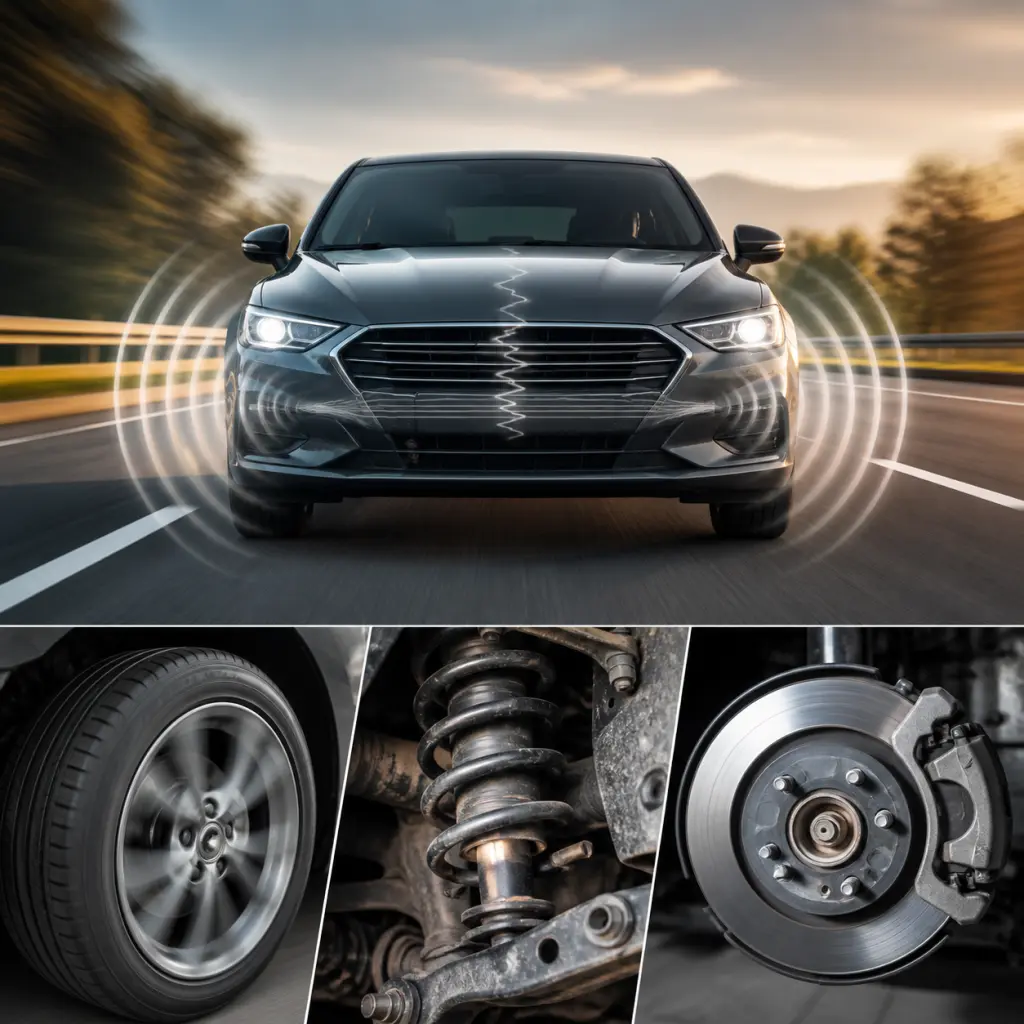
Highway-speed vibration is usually tied to imbalance somewhere in the rotating system, but the source of that imbalance can vary widely. Wheel balance is a frequent starting point. After hitting potholes or rough pavement, it’s not uncommon for wheel weights to shift or fall off, which creates a vibration that becomes more noticeable as speed increases.
However, in our shop, we often find that the issue goes beyond simple balance. Worn suspension components such as control arm bushings, ball joints, or steering linkage can introduce small amounts of play that only become apparent at higher speeds. What feels stable at 30 MPH can feel completely different at 60 MPH because those components are under greater load and movement.
We also see cases where brake components contribute to the problem. Slight rotor irregularities or uneven wear can create a vibration that overlaps with speed-related symptoms, especially if the issue changes when braking.
Why It Often Shows Up After Winter in Cortland
Local driving conditions play a major role in how these problems develop. In Cortland, the combination of freezing temperatures, road salt, and potholes accelerates wear on suspension and steering components. Many vehicles leave winter with minor wear that hasn’t yet affected daily driving.
Once drivers return to consistent highway speeds, those small issues become much more noticeable. What feels like a sudden vibration is usually the result of gradual wear reaching a point where it can no longer go unnoticed. Short local trips can hide the problem for weeks or months, while highway driving exposes it almost immediately.
How We Diagnose the Root Cause
When a vehicle comes into our shop with this concern, the goal is not to guess but to confirm. We start by evaluating wheel balance and tire condition, then move through a full inspection of suspension and steering components to identify any looseness or wear.
In many cases, we perform a road test to recreate the exact conditions described by the driver. This allows us to feel the vibration firsthand and connect it to the specific system responsible. That process is what prevents unnecessary part replacements and ensures the repair addresses the actual cause.
Vibrations can also come from multiple contributing factors at once. For example, a slightly out-of-balance wheel combined with minor suspension wear can amplify the feeling at highway speeds. This is why a thorough, step-by-step inspection is critical rather than focusing on a single potential issue.
For drivers experiencing this issue, related services such as wheel alignment in Cortland, NY and suspension repair services are often part of the solution, especially when wear has progressed beyond a simple adjustment.
Why Early Diagnosis Matters
A vibration at highway speed is rarely just a comfort issue. In our experience, it is often an early indicator of wear that will continue to worsen. Small imbalances can lead to uneven wear, and minor suspension looseness can affect handling and stability over time.
We’ve seen many cases where drivers delayed inspection because the vehicle was still drivable, only to return later with multiple worn components instead of one isolated issue. Addressing the problem early typically results in a more straightforward and cost-effective repair.
There is also a long-term cost factor that many drivers underestimate. When components are allowed to wear beyond their limits, they begin to affect surrounding systems. A minor issue in the suspension can eventually influence steering precision or braking performance, leading to more complex repairs.
In addition, prolonged vibration can reduce overall driving comfort and increase fatigue on longer trips. While this may seem secondary, it often becomes noticeable for drivers who spend time commuting on highways like I-81 or traveling outside Cortland regularly. Fixing the issue early restores not just vehicle performance, but confidence behind the wheel.
For additional insight into how vibrations and vehicle stability affect safety, refer to the National Highway Traffic Safety Administration, which outlines how maintenance and component wear can impact control at highway speeds.
A Real-World Example We See in Cortland
A common scenario we encounter involves drivers who notice a slight vibration on the highway after winter but ignore it because the vehicle still feels manageable. Recently, we had a Cortland driver come in with a shake at around 60 MPH that had gradually worsened over a few months. What started as a minor imbalance had led to uneven wear and additional stress on suspension components.
After a full inspection and road test, we identified a combination of wheel imbalance and worn bushings contributing to the issue. Addressing both problems early prevented further damage and restored a smooth, stable driving experience. Situations like this are a good reminder that small symptoms often point to multiple underlying factors, and catching them early makes a significant difference.
Frequently Asked Questions About Highway Vibrations
Is it safe to keep driving if my car shakes at 60 MPH? In some cases, the vehicle may remain drivable, but if the vibration is increasing or affecting steering control, it should be inspected as soon as possible. What starts as a minor issue can develop into a safety concern.
Is this always caused by wheel balance or tires? Not always. While imbalance is common, we frequently identify suspension wear or brake-related causes. A full inspection is the only reliable way to determine the exact source.
Will the vibration go away on its own? In our experience, it does not. Vibrations are typically caused by wear or imbalance that will continue to progress until it is properly corrected.
Schedule Service with a Trusted Cortland Auto Repair Shop
If your vehicle starts to shake at highway speeds, it’s a sign that something has changed and needs attention. At Tallmadge Tire & Auto Service of Cortland, we focus on accurate diagnosis and straightforward recommendations based on real experience.
Call us directly at 607-756-7559 to speak with our team or schedule an appointment through our contact page. We proudly serve Cortland and the surrounding communities with reliable, professional automotive care backed by decades of hands-on expertise.
Addressing a vibration early helps protect your vehicle, your safety, and your long-term repair costs. Let’s take care of it the right way.

Joined Tallmadge Tire in 2014 when she decided she was interested in taking over the family business. Purchased the business in 2019 and lives in Homer with her husband, Luke, and 3 kids: Mallory, Reese, and Andrew. When she’s not at the shop, she can be found in the stands watching her 3 kids play sports.